 WebLevitationContact here
 Own-studio project / WebLevitation
The studio website, with the decisions made visible.
WebLevitation is my own business website. This project shows how the visual direction, service content and contact experience fit together. It is an own-studio project, not a customer commission or evidence of client results.
Get a free website proposal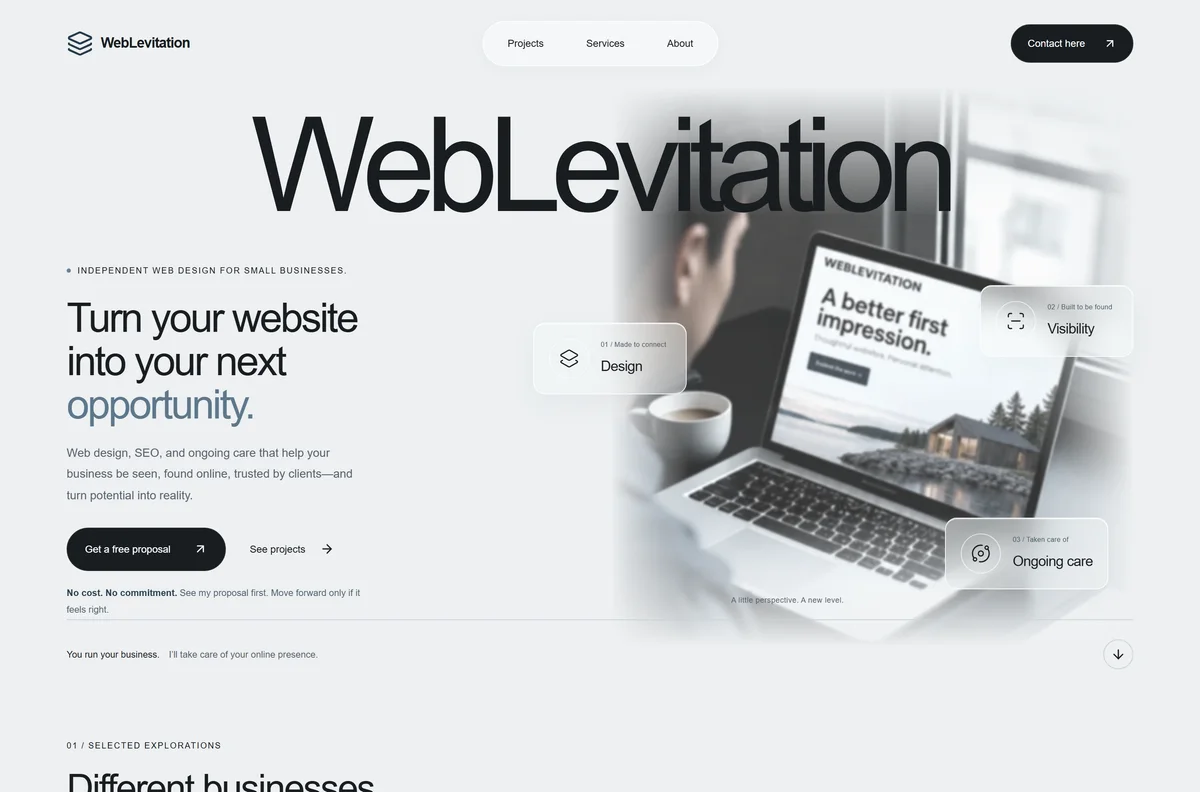
The brief: make a personal service easy to understand.
The site needed to introduce a studio of one, explain web design and optional ongoing care, and offer a low-pressure first step. Visitors should understand who they will work with and what happens after they enquire.
That led to a visible founder introduction, separate explanations of the services and a free-proposal page. The offer distinguishes the free first proposal from the paid website project. No price, delivery deadline or result is promised before the scope is agreed.
A visual identity with room for the message.
The design uses a cool grey background, large dark type and a restrained blue-grey accent. Layered plates became the static brand mark. Soft imagery and glass-like surfaces provide depth around the main message.
The Stillfjord and Form & Field previews explore different directions for fictional businesses. Both are labelled as concepts. The distinction matters: a design exploration can demonstrate an idea without implying a customer relationship or a completed commercial result.
An enquiry route that accounts for interruptions.
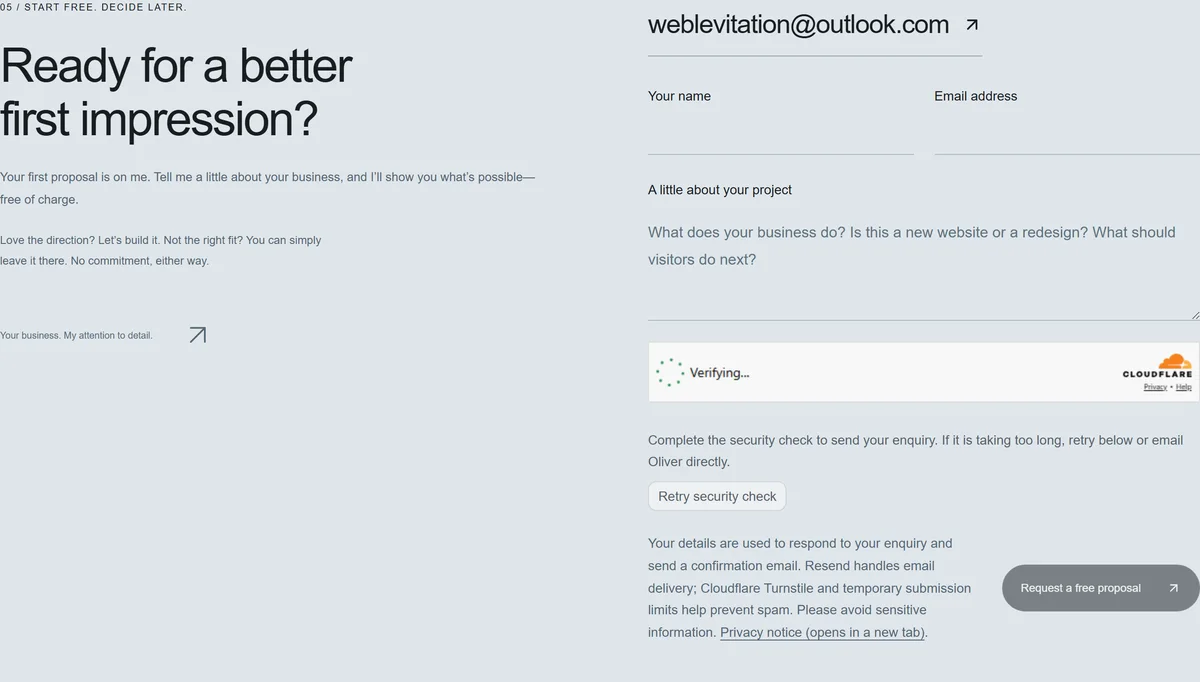
The form asks for a name, email address and a short project description. A direct email address is visible beside it, and the privacy notice explains the handling of those details.
Verification can fail to load or expire while someone writes. The form explains those states and offers a retry while keeping the entered text. If JavaScript is unavailable, the email alternative remains accessible. Successful submission is described as acceptance for delivery, which does not claim that an email reached the Inbox.
A short walkthrough you can try on your phone.
Start on the homepage: the main action leads to an enquiry, while the projects link lets you explore the visual direction first. The service labels introduce design, visibility and care without adding extra steps before contact.
Open a concept project to see the design and the explanation together. On a smaller screen, the content follows a single-column reading order. Navigation and contact links remain separate from the decorative laptop previews.
At the enquiry form, a few fields are enough to begin. The email alternative is available if you prefer it or the security check cannot finish. This connects the studio introduction to a practical next action.
What was checked before publication.
The launch checks covered page titles and descriptions, canonical addresses, structured data, internal links, the sitemap and the missing-page response. Contact tests checked validation, spam protection and provider failure handling. Browser tests exercised the form on mobile and desktop, including keyboard retry and preserving text after a failed attempt.
The checks establish specific website behaviour, not future traffic or sales. Search performance and genuine enquiries need to be observed over time. Email delivery events can identify failures after acceptance, but cannot prove Inbox placement.
The lesson for a service-business website.
A useful website connects the promise to the next step. The service explanation, evidence, contact options and ongoing responsibilities need to agree with each other. A polished visual introduction is most useful when visitors can also find the details needed to make a decision.
For your project, the content and priorities would come from your own customers, services and constraints. The first proposal is where we explore that direction together.
No cost. No commitment.
Start with a free proposal.
Tell me about your business. See the direction before you decide.